Block Crush!
- 4.6
- Rating
- 50.00M
- Installs
- Free
- Price
 Analysis by App-foxy
Block Crush is the kind of puzzle game I can open without preparing myself for a long session. I place blocks, clear space, and try to keep the board from becoming unmanageable. That sounds simple, and it is, but the appeal comes from how quickly a harmless-looking move can limit the choices that follow. After spending time with it, I found that its real question is not whether it is entertaining for a few minutes, but whether the routine remains satisfying once the first-day novelty disappears.
My short answer is that it earns a place on a phone for players who enjoy quiet, repeatable decision-making. It is free, rated for Everyone, and belongs to the puzzle category, so it is easy to recommend to families, casual players, and anyone who wants something more thoughtful than an idle distraction. It is less suitable for someone looking for a campaign, a strong narrative, or a constant stream of new mechanics. The experience lives or dies by the pleasure of arranging space well.
How the first week feels
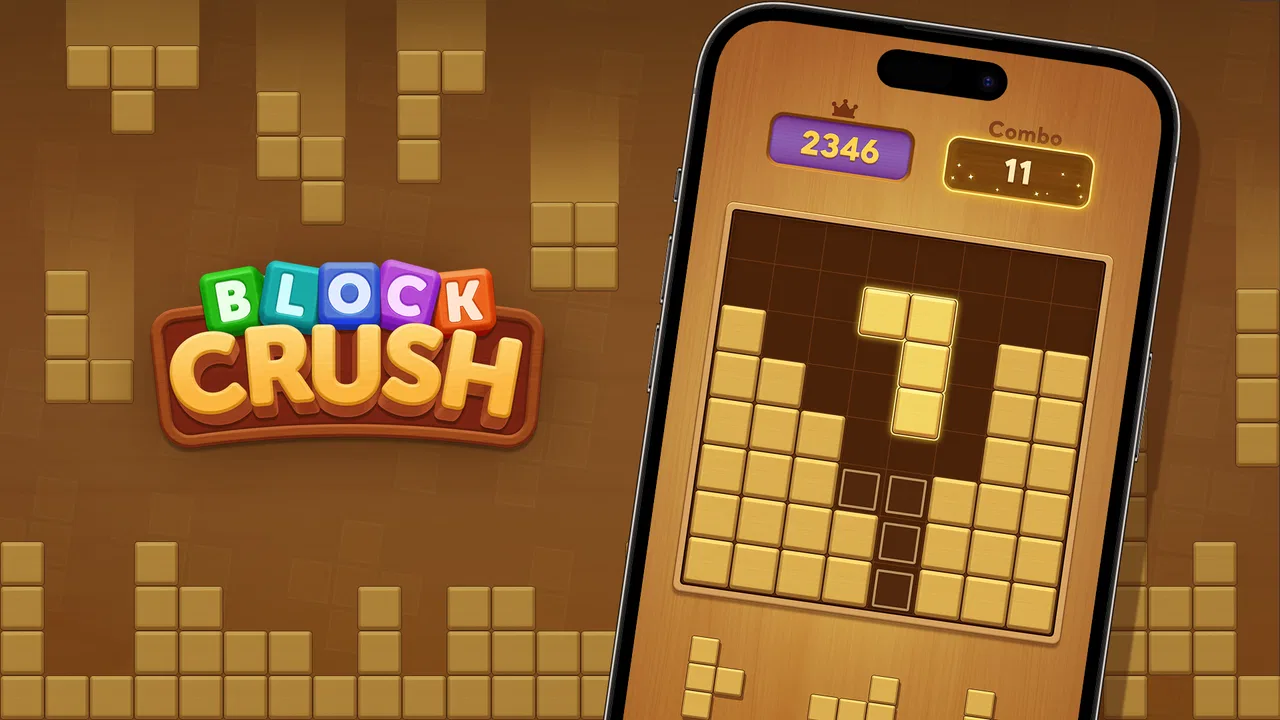
The opening appeal is immediate because the basic interaction is easy to understand. I do not need a tutorial-heavy introduction or a large set of rules before making useful decisions. The board gives me a compact problem, and every placement asks me to think about both the space I need now and the space I may need later. That balance makes even a short session feel active rather than automatic.
You May Also Like

 AccuWeather: Weather Radar
AccuWeather Review: A Quick, Clear Forecast for Everyday Decisions
For everyday plans, the best forecast is the one you can understand quickly. AccuWeather makes rain timing, radar, and local conditions easy to act on, with a few trade-offs.

 Hill Climb Racing
Why Hill Climb Racing Still Turns Crashes Into One More Run
A tiny car, a bumpy hill and one more upgrade: Hill Climb Racing keeps resurfacing because its simple chaos makes every near-miss feel personal.

 AliExpress - Shopping App
AliExpress Makes Global Shopping Feel Personal, but Shoppers Bear the Risk
AliExpress turns a global marketplace into a pocket-sized discovery engine. Its reach is useful, its shopping loop compelling, and its trade-offs easy to miss.

 Lords Mobile: Kingdom Wars
Lords Mobile Is a Kingdom-Building Routine, Not a Quick Match
A case-by-case verdict on the building, battles, device demands, and social commitments that make Lords Mobile rewarding for some players and exhausting for others.

 PDF Scanner app - TapScanner
TapScanner Makes Paperwork Easier to Capture, Check, and Share
TapScanner makes scanning with a phone feel less like a rescue operation and more like a dependable step in getting work done. Its capture tools are useful, though not flawless.

 Block Blast!
 Shows How Much a Puzzle Game Can Leave Out
A quiet grid game shows why puzzle players increasingly value instant clarity, repeatable skill and low-pressure play—and where the genre still needs to catch up.
More From Our News Desk
View All News


What surprised me is how different the same type of move can feel depending on the remaining gaps. A block that looks inconvenient in one position may become the piece that completes a clearing opportunity when placed carefully. I quickly learned not to judge a move only by the number of open squares it uses. The shape of the empty area matters just as much, because awkward pockets can become more troublesome than a board that simply looks crowded.
During the first week, the strongest use case was filling small pauses in the day. I could play while waiting for an appointment, during a short break, or when I wanted to switch off without committing to a story or a competitive match. The game does not demand the emotional attention of a difficult action title, but it still gives me enough control to make each turn feel meaningful.
That makes it a particularly good fit for players who like short strategic puzzle sessions. You can approach each board casually, yet careless placement still has consequences. I enjoyed that middle ground more than I expected: the game is accessible enough for a beginner, but it rewards patience rather than simply tapping as quickly as possible.
My most useful early habit was to protect flexible open space instead of immediately chasing the most obvious clearing. The temptation is to fill a line as soon as possible, but doing so can leave the rest of the board fragmented. I started treating broad, connected areas as a resource. Keeping one such area available gave me more options when less convenient blocks appeared.
Another practical lesson was to avoid building around a single imagined solution. I sometimes placed pieces as if the next shape would be exactly what I wanted, only to discover that the board had become dependent on that hope. A safer approach is to leave more than one workable route. This does not remove the uncertainty of the puzzle, but it reduces the damage caused by an awkward sequence.
The first-week experience is helped by the lack of a steep learning curve. I could hand the game to someone unfamiliar with mobile puzzles and explain the objective in ordinary language. The developer, Wonderful Studio, has kept the central idea clear enough that the game does not bury its appeal under unnecessary complexity. That clarity is one reason it feels approachable for an Everyone-rated audience.
Still, easy to understand does not mean endlessly fresh. The first sessions benefit from discovery: I am learning how much room to preserve, how quickly a board can become constrained, and how satisfying a well-timed clearing can be. Once those lessons become familiar, the game has to rely on the quality of its repeating decision cycle. That is where the longer-term test begins.
Why the simple board can still demand planning
The best moments come from delaying a convenient move. I often had the option to clear a space immediately, but waiting allowed me to build a cleaner arrangement and avoid creating isolated corners. This is a small distinction, yet it changes the game from visual tidying into forward planning. The board rewards me for considering what the current placement does to the next several choices.
I also found that a nearly full board is not always a lost board. If the remaining gaps are connected, there may still be a way to recover. Conversely, a board with plenty of empty area can be dangerous when that area is broken into unusable fragments. This is a useful insight for new players: count the quality of your space, not just its quantity.
That said, the game remains intentionally focused. It does not offer the variety I would expect from a larger puzzle collection. If your ideal mobile game changes rules regularly, introduces new objectives, or gives you a campaign to work through, Block Crush may feel narrow after the initial learning period. Its first-week strength is concentration, not breadth.
What remains valuable from month to month
After the novelty fades, I judge the game by whether I still want to return without needing a special reason. In this case, the recurring value comes from the fact that no board feels completely solved in advance. Even with a familiar objective, the arrangement of pieces and the available space create small variations in how I must respond. That is enough to support a modest habit, especially when I want a calm mental reset.
The game works best as a background routine rather than a main entertainment destination. I would not choose it when I want to spend an evening immersed in a large world, but I do choose it when I need a few minutes of focused attention. The distinction matters. Its long-term value is not based on constant excitement; it is based on being dependable and easy to resume.
For me, the most sustainable pattern is to treat each session as a single puzzle break rather than trying to force a long run. That prevents the familiar board logic from becoming tiring too quickly. It also makes the game useful in everyday situations where I have an uncertain amount of time. If my break ends early, I have not lost the benefit of the session.
One of the better long-term techniques is to use the edge of the board carefully. Edges can feel safe because they limit the directions from which a block can interfere, but filling them too aggressively can create a rigid structure. I prefer to use an edge when it supports a larger connected area, not merely because the square is available. This keeps the board adaptable instead of turning the perimeter into a collection of dead ends.
A second technique is to recognize when a clearing is useful because of the space it creates, not because it looks impressive. Clearing a compact section may provide a much better future board than clearing a larger-looking arrangement that divides the remaining room. I found this particularly helpful once I stopped judging progress by immediate visual results and started judging it by the options available afterward.
The fact that the game is free lowers the barrier to keeping it installed. I can recommend trying it without asking someone to make a purchase first. That does not automatically make it a permanent keeper, though. Free games still compete for storage, attention, and home-screen space. Block Crush needs to justify its place through reliable use, and it does that mainly for people who genuinely enjoy spatial planning.
Its popularity also suggests that the basic format has broad appeal: it has an average rating of 4.8 from around 151 thousand ratings, and it has passed 10 million installs. I see those figures as evidence that the straightforward format connects with many players, not as a guarantee that every player will enjoy the repetition. A high level of adoption cannot replace personal fit.
Who benefits from keeping it installed
I would keep it installed for someone who wants a puzzle that can be played silently and at a flexible pace. It suits a commuter who has a few minutes between stops, a parent looking for an accessible game to share with a child, or a person who prefers planning over reflexes. It is also a reasonable choice for players who find competitive leaderboards stressful and want the board itself to be the main challenge.
I would be more cautious recommending it to someone who needs a strong sense of progression. If you want characters, chapters, a story, or a sequence of distinct puzzle types, this is probably not the right destination. A more content-rich puzzle game will offer greater variety. Block Crush is better understood as a repeatable mental exercise with a game-like presentation than as a broad adventure.
The age rating of Everyone makes the concept easy to share, but younger players may still benefit from guidance about planning rather than rushing. The rules are approachable, yet the most satisfying play comes from learning to preserve options. That is a useful lesson for a family session, provided the goal is relaxed problem-solving rather than constant rewards.
Maintenance, friction, and reasons fatigue can appear
The maintenance burden is low in the practical sense. The game is available at no cost, and the current version is 1.8.3. It supports devices running Android 6.0 or later, which gives it a broad compatibility range for Android users. I would still check the device requirements before installing on an older phone, but the stated minimum makes it accessible to many existing devices.
What requires maintenance is not managing the app; it is managing my expectations. Because the central activity is so focused, I cannot expect every session to feel new. The game needs to remain a small, repeatable habit. When I approach it expecting a constant supply of surprises, the simplicity becomes a weakness. When I approach it as a quick planning exercise, the same simplicity becomes its main convenience.
Fatigue usually comes from repetition rather than difficulty. The placement-and-clearing loop is satisfying when I am engaged, but it can feel familiar if I play for too long without a break. I found that extended sessions made the decisions blur together, while shorter visits preserved the sense that each board deserved attention. This is an important trade-off: the game is more enjoyable when I do not overconsume it.
Another source of frustration is the feeling that a promising board can become restrictive because of one poor decision. That tension is part of the strategy, but it may bother players who prefer puzzles with a clearly recoverable path. I sometimes wished I had treated an earlier move as a warning rather than trying to rescue a cramped arrangement. The lesson is useful, though not always comfortable: the game asks me to accept that planning mistakes can shape the rest of a run.
There is also a difference between relaxing and effortless. Block Crush is calm, but it is not mindless if I want to play well. On a tiring day, I may not want to protect future space or compare several possible placements. In those moments, a purely casual matching game may be a better fit. This one asks for a small amount of concentration, even when the session is brief.
Compared with usual alternatives in the puzzle category, its advantage is the compactness of the decision-making. Match-style games often emphasize rapid recognition and immediate combinations, while falling-block games can add pressure through timing. Block Crush gives me more control over the pace and makes spatial planning the central concern. The trade-off is that it offers less sensory variety and less dramatic escalation than those alternatives.
That comparison also explains who should skip it. If you enjoy puzzles because of speed, animation, competition, or a steady stream of new objectives, another option will probably hold your attention longer. If you enjoy looking at a crowded arrangement and finding a careful way to preserve room, this game is more likely to become a dependable favorite.
Small habits that improve the experience
I recommend pausing before every placement, especially when the board still has comfortable space. The pause is not about overthinking; it is about noticing whether the move creates a narrow pocket or divides a useful area. This one-second check improved my results more than trying to play faster.
I also try to keep one region open for awkward shapes instead of filling every attractive gap. That reserve gives the board breathing room and makes recovery more likely. It is tempting to make the layout look tidy, but tidy is not always flexible. The strongest boards are often the ones that look slightly unfinished while retaining several possible placements.
Finally, I stop when I notice that I am placing blocks automatically. Continuing past that point rarely feels rewarding, and it can turn a pleasant habit into a chore. Because the game works well in short sessions, there is little reason to force it. Its recurring value improves when I leave wanting another turn rather than needing a break from it.
My long-term verdict
Block Crush earns lasting space on my phone as a focused, low-commitment puzzle game, but only if I accept what it is. It is not a content-heavy journey, and it does not need to be. Its strength is the clean relationship between placement, available space, and future choices. I can understand it quickly, improve through observation, and return for a short session without rebuilding a complicated context.
The game is at its best when I use it as a deliberate pause in the day. A few careful moves can provide more mental engagement than passive scrolling, while the lack of a demanding storyline makes it easy to put down. That balance gives it genuine recurring value for casual strategists and players who like puzzles that reward restraint.
My reservations are equally clear. Repetition will eventually bother anyone who needs constant novelty, and the focused format can feel limited beside puzzle games with campaigns, varied modes, or more elaborate progression. The board can also punish careless planning in a way that feels frustrating when I am tired. Those are not minor details; they determine whether the app becomes a habit or gets forgotten.
For my own use, the deciding factor is maintenance of attention, not maintenance of the installation. I keep coming back when I play in short bursts, protect flexible space, and treat each placement as a choice rather than a reflex. The lasting appeal is in preserving options, not simply clearing blocks. If that kind of quiet strategy sounds satisfying, this free game from Wonderful Studio is worth trying. If you want a richer puzzle system with a stronger sense of progression, I would choose a different alternative instead.
Overall, I see Block Crush as a reliable everyday puzzle rather than a game designed to dominate my free time. Its 4.8 average and broad audience are understandable because the premise is friendly and the learning curve is gentle. I would recommend it to someone who wants a simple board with enough depth to reward better habits, while being honest that its long-term success depends on enjoying repetition with purpose.
FAQs for Block Crush!
01What is Block Crush! and how does it work?
Block Crush! is a captivating puzzle game where players strategically place blocks on a grid to clear lines and score points. The game challenges users to think ahead and maximize their space efficiently. As players progress, the difficulty increases, making it a fun and engaging way to test your spatial awareness and strategic skills.
02Is Block Crush! free to download and play?
Yes, Block Crush! is free to download and play on both Android and iOS platforms. However, the game may include optional in-app purchases and ads. These can enhance the gaming experience or be used to remove advertisements, but they are not necessary to enjoy the core gameplay.
03What are the key features of Block Crush!?
Block Crush! offers several key features, including intuitive controls, a variety of levels, and vibrant graphics. The game includes a leaderboard for competitive players, daily challenges, and a colorful design that makes it visually appealing. Its easy-to-learn mechanics make it accessible to players of all ages.
04Does Block Crush! require an internet connection?
Block Crush! does not require a constant internet connection for its core gameplay, allowing users to enjoy the game offline. However, an internet connection is needed for features like leaderboard updates, daily challenges, and to make in-app purchases or remove ads.
05Are there any age restrictions for playing Block Crush!?
Block Crush! is suitable for players of all ages. However, it is always recommended for parents to monitor younger children's gaming activities, especially due to potential in-app purchases and ads. The game’s content is family-friendly, focusing purely on puzzle-solving skills.
Pros
- Intuitive interface for all age groups.
- Colorful graphics that enhance gameplay.
- Smooth performance with minimal lag.
- Daily challenges keep users engaged.
- Offline mode available for on-the-go play.
Cons
- Contains in-app purchases.
- Ads can interrupt the gaming experience.
- Limited free levels initially.
- Requires frequent updates.
- Battery consumption can be high.

Block Crush!
Gallery